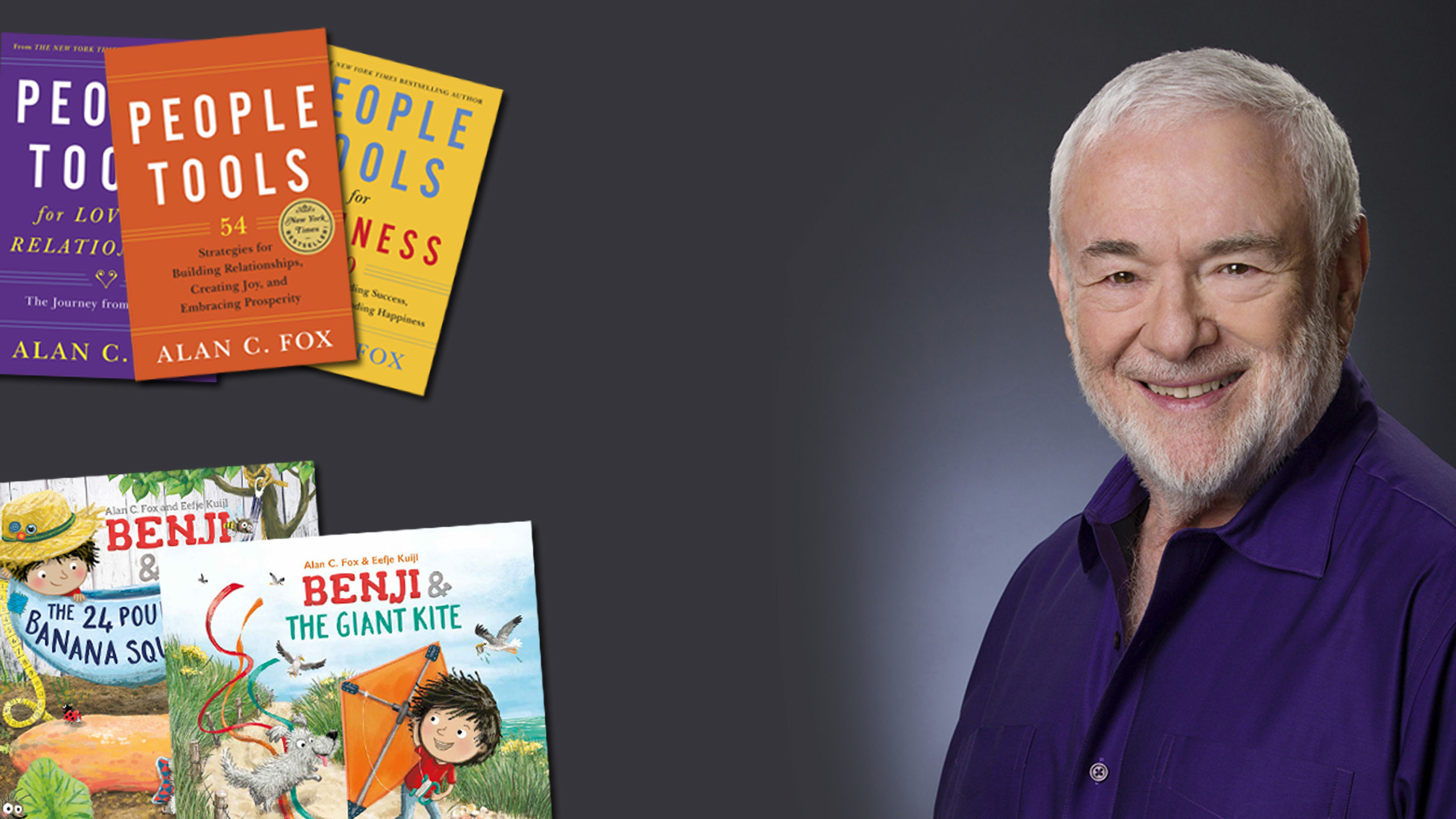

Header Image - Alan C. Fox

A Fairy Tale From Alan and AI

by Alan Fox 0 Comments
A Fairy Tale From Alan and AI

Gentle reader. Today’s blog is a treat — a short, humorous, modern fairy tale complete with a frog, retired dragons, and a princess, sort of.

You might smile at reading the story, but as a bonus, I’ve included an analysis of the story provided by one of my favorite new sources of amusement.  I’m a newcomer to AI, but I’m impressed by its uncanny ability to accomplish remarkably complex tasks in moments. By way of example, following the fairy tale, is an AI generated literary analysis that succinctly outlines the humor, wisdom and underlying meaning of “The Princess, the Porch, and the Problem of Three.” I’d love to know your thoughts, and if you’re letting AI add value to your life, please share how you’re using it.


The Princess, the Porch, and the Problem of Three

Once upon a comfortably inconvenient time, in a kingdom where the bread was always warm and the dragons were mostly retired, there lived a woman named Elowen who was not a princess, though everyone kept insisting she behaved like one when faced with menus, carpets, or life choices in general.

Elowen lived in a tower—not because she was imprisoned, but because it had excellent light and a view of the river. Also, she liked the steps; they made visitors work for it.

And work they did, for Elowen had three suitors.

The first was Sir Percival the Valiant, who arrived daily in gleaming armor that reflected sunlight into nearby villages. He was brave, handsome, and spoke almost exclusively in declarations.

“Fair Elowen,” he would proclaim, kneeling with a clang, “I would slay any beast for thee.”

“I don’t have any beasts,” Elowen would reply. “Unless you count the neighbor’s goat.”

Percival nodded solemnly, already drawing his sword.

The second suitor was Benedict the Wise, a scholar whose robes smelled faintly of ink, dust, and confidence. He brought books instead of flowers and corrected people mid-sentence, including Elowen, the baker, and once a pigeon.

“Love,” he explained during one visit, “is merely a contract of mutual benefit, statistically optimized for longevity.”

“That’s… very romantic,” Elowen said, rubbing her temples.

The third suitor was Rowan, a traveling musician with muddy boots, a cheerful grin, and a habit of sitting on Elowen’s porch steps as though they had been waiting for him his whole life.

“I brought a song,” Rowan said one morning.

“I didn’t ask for a song,” Elowen said.

“I know,” he replied, and played it anyway.

And so began Elowen’s great agony. Sir Percival could protect her, but she worried he would try to duel the furniture. Benedict could stimulate her mind but might annotate her feelings in footnotes. Rowan made her laugh, but he also forgot appointments, socks, and once an entire horse.

Elowen made lists. Pros and cons. Charts. She consulted her friends, her mother, a fortune-telling frog (who only said “ribbit,” which was unhelpful), and a magical mirror that showed her three different futures—each ending with her sighing over dinner.

“At this rate,” Elowen groaned one evening, pacing her tower, “I’ll die of indecision and they’ll argue over my houseplants.”

Unable to choose, she announced a trial.  Each suitor would prove he was the best match.

Sir Percival was asked to help with chores. He valiantly attempted to battle the laundry, lost to a fitted sheet, and declared defeat with honor.

Benedict was asked to relax. He lasted eleven minutes before explaining why relaxing was inefficient.

Rowan was asked to be serious. He tried very hard, frowned fiercely, and then tripped over his own seriousness.

That night, Elowen sat alone on the porch while the moon rose, exhausted from choosing.

Rowan appeared quietly and sat beside her.

“You don’t have to pick,” he said.

“I do,” Elowen replied. “That’s how stories work.”

Rowan smiled. “Only the old ones.”

The next morning, Elowen made her decision. She gathered the suitors and cleared her throat.

“I choose,” she said slowly, “myself.”

The men gasped. Sir Percival saluted. Benedict asked for clarification. Rowan grinned.

Elowen continued, “But I would very much like one of you to stay.”

Rowan raised an eyebrow. “May I?”

And so it was that Elowen chose laughter over armor, curiosity over certainty, and a life less tidy but far more fun.

They lived happily ever after—after much discussion, occasional debate, and at least one argument about the laundry.

Which, as fairy tales go, is about as magical as it gets.


ANALSIS OF STORY

And now, as promised, what follows (if you choose to continue along with me on my deep dive into how AI can assist us) is the literary analysis of “The Princess, the Porch, and the Problem of Three.”

The humor works primarily through contrast, subversion of fairy‑tale tropes and expectations, and character exaggeration. Examples include:

  • Elowen is not a princess although she is treated like one—which pokes fun at how labels are socially imposed- not earned.
  • The tower is not a prison but a lifestyle choice (“excellent light”). This gently mocks the melodrama of classic fairy tales.
  • The “trial” of the suitors inverts heroic quests: chores, relaxing, and seriousness replace dragons and duels.

Each suitor embodies a familiar archetype exaggerated just enough to become comic:

  • Sir Percival represents performative masculinity—valor without context. His battle with the fitted sheet is a domestic slapstick moment that punctures heroic bravado.
  • Benedict is over-optimized intellect: wisdom drained of warmth; romance reduced to spreadsheets.
  • Rowan is charming chaos—the humor comes from his presence feeling right even when he is objectively unreliable (forgetting a horse is an absurd but telling detail).

The tale also embodies linguistic wit. The narrator’s voice is dry, contemporary, and gently ironic. Yet the humor is never cruel; it’s observational, inviting recognition rather than ridicule.

It aims to disarm the reader, making the wisdom easier to accept. Examples of this include the retired dragons, or the unhelpful frog which ground the magic in modern sensibilities.

The story’s wisdom lies in its rejection of binary thinking and checklist‑based life decisions.

The three suitors symbolize three common approaches to partnership—and life:

  1. Security (Percival), protection without adaptability.
  2. Intellect (Benedict), insight without ease.
  3. Joy (Rowan), connection without control.

Three crucial insights of the story include an understanding that compatibility is not perfection, tradeoffs are inevitable, and analysis can become paralysis.

The Central Turning Point in the story is indicated in the dialogue about choosing a suitor —“You don’t have to pick,” [Rowan said]. “I do,” Elowen replied. “That’s how stories work.” Rowan smiled. “Only the old ones.”

This exchange is the philosophical heart of the tale. It reframes choice not as destiny imposed by narrative tradition, but as agency exercised in the present. The story argues that traditional scripts (marriage as resolution, prince as prize) are optional, and choosing self is not selfish, but foundational. Elowen’s choice isn’t rejection, it’s re‑prioritization. She chooses autonomy before attachment, identity before role, partnership as invitation, not completion. This is wisdom rooted in modern emotional literacy: relationships work best when they are additive, not substitutive.

At its core, this is a fairy tale that redefines “Happily Ever After.” The ending refuses mythic finality. Happiness includes debate, magic includes laundry arguments, and love is ongoing, negotiated, and imperfect. This grounds the fairy tale in reality without draining it of enchantment.

Elowen doesn’t choose Rowan because he is the “best” man—she chooses him because he fits. He does not demand, does not optimize, does not perform heroism. Instead, he shares space: the porch, the silence, the song that wasn’t requested. This is a subtle but powerful assertion that if joy respects autonomy, it is more sustainable than excellence that demands compliance.

The story knowingly plays with genre in a Meta‑Fairy‑Tale commentary where towers, suitors, and quests are reframed. Magic exists, but it’s irrelevant compared to self-understanding. And the real spell is permission to write a new ending.

In summary, the story’s humor is warm, intelligent, trope‑aware, and character‑driven. It is emotionally sophisticated, rejecting optimization and external validation in favor of lived coherence. It is a modern fairy tale advocating self‑choice, flexible partnership, and happiness as an evolving practice rather than a narrative reward.

Ultimately, the story suggests that the most radical magic today is not true love’s kiss—but the courage to say: “I choose myself. And then, maybe, I choose you too.”

Alan

50 views

Poetry and Chat GPT

by Alan Fox 0 Comments
Poetry and Chat GPT

Several nights ago I was curious about what kind of poem ChatGPT could produce, so I sent it the following prompt:  Write a sonnet about a trash truck (certainly not a poetic subject).  A few seconds later I was surprised to receive the poem which you can read below.

After I read the trash truck poem, I tried something more adventurous. Since it’s quite difficult to write either a humorous or a funny poem, my next prompt was: Write a funny, short, rhyming poem. In fewer than three seconds I received a poem about a cat, also reprinted below.

TRASH TRUCK

The metal beast arrives before the sun,
With flashing lights of amber, pulsing slow.
The neighborhood’s long rest is nearly done,
As hydraulic veins begin to heave and flow.
It stops before the curb with heavy sighs,
To lift the plastic tombs of all we waste;
Beneath the pale and early morning skies,
The steel-toothed maw consumes with rhythmic haste.
The driver steers through narrow, sleeping lanes,
A steady hand against the morning chill,
Relieving us of all our cluttered stains,
While city streets are silent, gray, and still.
Though few will pause to praise this grinding chore,
It guards the peace behind each bolted door.

MY CAT

My cat is such a lazy soul,
He sleeps inside his plastic bowl.
He doesn’t hunt or chase a mouse,
He thinks he owns the entire house.

He screams for food at 3:00 AM,
As if he’s lost a precious gem.
I stumble out to fill his plate,
He sniffs the bowl and sighs at fate.

“This salmon mix is far too dry,
I’d like some shrimp,” his eyes imply.
He leaves the food and walks away,
Then naps for twenty hours a day.


So, what do you think of Chat GPT’s poetry? 

Until next week.

Alan

P. S.  If you try chatGPT yourself, you might use open ended prompts for greater AI creativity.

76 views

Artificial Intelligence – Friend or Foe

by Alan Fox 1 Comment
Artificial Intelligence – Friend or Foe

In 2013, I published my NY Times bestselling book, People Tools: 54 Strategies for Building Relationships, Creating Joy, and Embracing Prosperity.  It was a book that took me years to write. It was a practical guide on how to get along with people, a skill that is the cornerstone for building a successful, joy-filled life 

People Tools was published long before programs like Chat GPT emerged. But whether it’s Siri answering questions of fact, or Google advising on medical decisions, AI is now woven into the very fabric of our lives.

Ask a question on any search engine, and AI will pop up with an answer that may have previously taken hours, or days, to research. Do you even remember flipping through a Thomas Guide to find your way around the city?

But because it applies deep learning using neural networks inspired by the human brain, AI can also simulate human interactions and seemingly read text and mimic expressions of emotions. My son, who teaches at a top university, has begun using oral exams to prevent students from using AI generated answers.

So, what does this mean for human connections and relationships? Will reliance on AI for communication weaken our ability to navigate real-life social interactions and emotional cues? Might it replace genuine human relationships and impact the quality of real human social bonds? Might emotional attachments to AI become widespread?   Maybe you can Google an answer.  (Will it understand that what I just wrote was ironic?) (of course it will)…)

Artificial intelligence isn’t just a technological trend; it’s the defining force of our times. Despite the challenges, one thing is clear: AI will play a central role in shaping the future and understanding it today will help us to prepare.

FYI – I ran the above through Chat GPT and asked it to check for accuracy. Here is what it said: “This is strong, clear writing with a solid structure and persuasive flow. The ideas are accurate at a high level, but there are a few grammar issues, phrasing problems, and minor accuracy nuances worth tightening. I’ll give you a cleaned-up revision…

In the interests of remaining human, I present to you the original, (mostly) unaltered, or chat-GPT-ified version. I hope you enjoy it, human flaws and all.

Years ago, I read a science fiction story about mankind building, in outer space, the largest computer ever made. The very first question asked was this:

“Is there a God?”

A voice boomed out the — perhaps inevitable — response.

“NOW THERE IS.”

Alan (the real one, I think)


65 views